Push vs. Pull Marketing for Startups
Liftout was a smart idea with a working product. But we weren’t willing to do the early work that doesn’t scale — and that’s what killed it.
 Enri Zhulati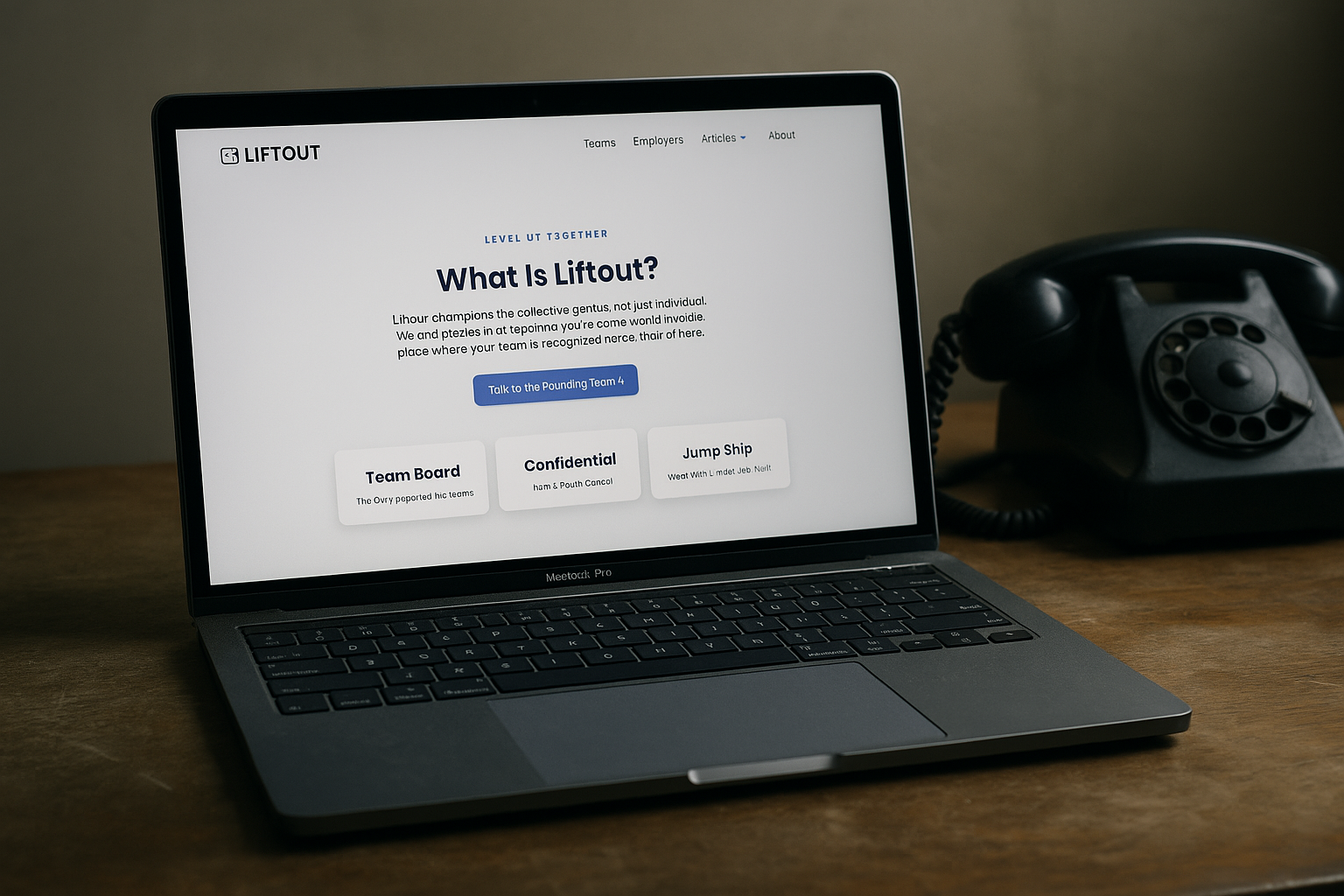
We Built the Product. Nobody Came. Here's What I Learned.
Liftout was a recruiting platform built on a genuinely good insight: the best hires come in groups, not solo. Companies poach entire teams all the time in M&A. We thought we could turn that into a product.
The platform worked. The idea was sharp. And nothing happened. Because we skipped the only part that actually matters in the first year of a startup: the push.
I've spent the years since building businesses that did get traction. The difference was never the product. It was whether the founder was willing to do the ugly, manual, unscalable work that creates the first 100 users. That lesson cost me a startup. I'm going to save you the tuition.
Why 42% of Startups Die Before They Start
CB Insights analyzed thousands of failed startups and found the number one killer: 42% failed because there was no market need. Not bad code. Not ugly design. No customers.
But here's what that stat hides. A lot of those startups did have market potential. They just never proved it because the founders sat behind their laptops waiting for inbound traffic that never showed up. They confused "building" with "launching." Those are two completely different jobs.
Another 14% failed specifically due to poor marketing. Add it up and over half of startup deaths trace back to the same root cause: the founders never figured out how to get their product in front of the right people. That's not a product problem. That's a push problem.
Pull Marketing Is a Luxury You Haven't Earned Yet
Pull marketing is what most founders fantasize about. You create great content. You rank on Google. Customers find you. You convert them. It's clean, it's scalable, and it works. I've built pull systems that generate leads on autopilot for years.
But pull only works when two conditions are true:
- Existing demand. People are already searching for a solution. They're using spreadsheets, legacy tools, or duct-taped workflows. Your product just needs to be the better version.
- Inbound intent. There's actual search volume. People are typing their problem into Google, Reddit, or an AI assistant. You show up. They click. You win.
If your product creates a new category or solves a problem people don't know they have, pull marketing is useless in year one. Nobody is searching for something they don't know exists.
With Liftout, nobody was Googling "how to hire a fully-formed team." There was no category. No search volume. No playbook. Just an idea with zero built-in demand. Pull was never going to work. We needed push. And we refused to do it.
Push Is the Work Nobody Wants to Do
Push marketing means you go to the customer. You don't wait. You don't "build awareness." You physically, manually, relentlessly put your product in front of one person at a time.
That looks like:
- Cold outreach with a personalized message
- Founder-led demos where you sell and onboard simultaneously
- Showing up in communities where your buyers already hang out
- Manual onboarding that feels more like consulting than software
- Following up five times when nobody responds the first four
It's not glamorous. It doesn't look good on a pitch deck. And it's exactly what separates startups that survive from startups that stall.
Brex Spent $19K on Champagne and Got 169 Customers
When Brex launched their corporate card for startups, they had about 30 employees and near-zero revenue. They didn't run Facebook ads. They didn't hire an SEO agency. They bought 300 bottles of Veuve Clicquot.
Their team pulled a list from Pitchbook of Bay Area startups that had raised seed through Series B rounds in the past six months. About 300 companies. They sent each one a bottle of champagne with a handwritten note from the CEO: "Congrats on your recent fundraise. We know how hard it is to build a startup and we're rooting for you."
Then the CEO followed up with a personal email asking if they'd want a demo.
75% said yes to the demo. 75% of those converted. That's 169 paying customers from a $19,000 campaign. The math: $50 per bottle, $2K for handwritten notes, $2K for TaskRabbit deliveries. Total customer acquisition cost under $115 per customer for a B2B fintech product.
That campaign was completely unscalable. Coordinating 300 champagne deliveries across the Bay Area is logistically absurd. And that's exactly why it worked. It felt human. It stood out. It wasn't another cold email in a founder's inbox.
Airbnb's Co-founder Was the Photographer, Copywriter, and Support Team
Brian Chesky didn't wait for hosts to figure out how to make great listings. He walked up brownstone stairs in New York, took the photos himself, wrote the descriptions, and posted them. He was customer support, content creator, and sales rep all in one person.
"I remember walking up to the top of a brownstone in New York, and I'd take photos, write the descriptions, and post them myself. I was the photographer, copywriter, and customer support all in one." - Brian Chesky
That's what doing the work looks like. Not strategy decks. Not growth hacking frameworks. Just a founder doing the job that needs doing, even when it feels beneath the title.
LinkedIn's First 12,000 Users Were All Personal Contacts
On launch day, the LinkedIn founding team sent invites to their professional contacts and asked each person to invite theirs. Most of the first 12,000 signups were first or second degree connections of the founders. No ads. No virality. Just a founding team working their network one person at a time.
The Founder-Led Sales Era Is Not a Phase
There's a trend in 2025 and 2026 that validates everything I learned the hard way: early-stage startups are leaning harder into founder-led sales than ever. Many YC-backed companies delay hiring their first sales rep until they cross $1M in annual recurring revenue.
The logic is simple. Nobody can sell your product better than the person who built it. You understand the pain. You can handle objections in real time. You can adapt the pitch based on what you learn from each conversation. And every sales call doubles as customer research.
Decision-makers in 2026 value authenticity and direct access. They'd rather hear from the founder than a BDR reading a script. That's your advantage as a small team. Use it.
Once you've personally closed enough deals to see the pattern, then you document the playbook, hire a closer, and start building the machine. But you have to be the machine first.
What I Got Wrong with Liftout
Neither of us wanted to become recruiters. Not for six months. Not even to prove the concept. We didn't want to cold-call teams. We didn't want to chase HR reps. We didn't want to manually match teams with companies.
So we didn't. We stayed in our day jobs. We polished the site. We assumed users would come.
Paul Graham said it years ago: "Startups don't take off on their own. Founders make them take off." Everyone quotes that line. Almost nobody lives it.
We built the car but nobody wanted to be the engine. And a car without an engine is just furniture.
The Question You Have to Answer Before You Build Anything
Before you write a single line of code, ask yourself this:
- Am I willing to do the work that doesn't scale to bring this to life?
- Am I willing to become the person this business needs me to be in year one?
- If the ugly, manual version of this job doesn't excite me at all, do I actually want to run this business?
If the answer is no, stop. Save yourself the months. A good idea without a founder willing to push it into existence is just a side project with a landing page.
The Playbook: How to Push Before You Can Pull
If you're early-stage and your product doesn't have built-in search demand, here's the sequence that actually works:
1. Identify 200-500 ideal customers by name
Not personas. Real companies, real people, real email addresses. Use LinkedIn, Pitchbook, Crunchbase, or industry directories. You need a list, not a target market slide.
2. Build a personal outreach sequence
Not a mass email blast. Write messages that reference something specific about their company. Mention a recent milestone, a blog post they wrote, a problem you know they have. Make it clear a human wrote this.
3. Offer value before asking for anything
Share a useful insight. Do a free audit. Send a short video walkthrough of how your product solves their specific problem. The first touch should give, not ask.
4. Follow up relentlessly
Most deals close after the fifth follow-up. Most founders quit after the first. The gap between those two numbers is where startups die.
5. Do the onboarding yourself
Don't hand new users a docs link. Get on a call. Walk them through it. Watch where they get confused. Fix it in real time. Every onboarding call teaches you something your analytics dashboard never will.
6. Earn the right to pull
Once you have 50-100 customers and understand exactly who buys and why, then invest in content, SEO, and inbound. Now you have the data to build a pull engine that actually converts. Pull without push data is just guessing.
Building Is the Easy Part
I love building things. Designing systems. Shipping products. Solving technical problems. That's the fun part. It's also the part that tricks you into thinking you're making progress.
The real work starts after you ship. The calls, the demos, the rejections, the follow-ups, the awkward LinkedIn messages, the unscalable gestures that make one person at a time care about what you made. That's the work.
90% of good products die not because they were wrong, but because the founders refused to do the part that felt beneath them. Don't be that founder. Be the engine.
Continue Reading

The ROI of Technical SEO
Technical SEO might seem complex, but it delivers some of the highest ROI of any digital marketing strategy—often with results that compound over time.
Hidden SEO Opportunities
Standard SEO advice works—until it doesn't. Discover hidden opportunities most websites overlook that can drive exceptional traffic without massive budgets.

What Content Gets Cited in AI Chatbots?
AI chatbots are creating a new traffic source for websites. Learn what makes content citation-worthy and how to optimize your content for AI visibility.