Don't Sweat the Small Stuff
A glass paperweight on my desk at a medical device company taught me the most important career lesson I've ever learned.
 Enri Zhulati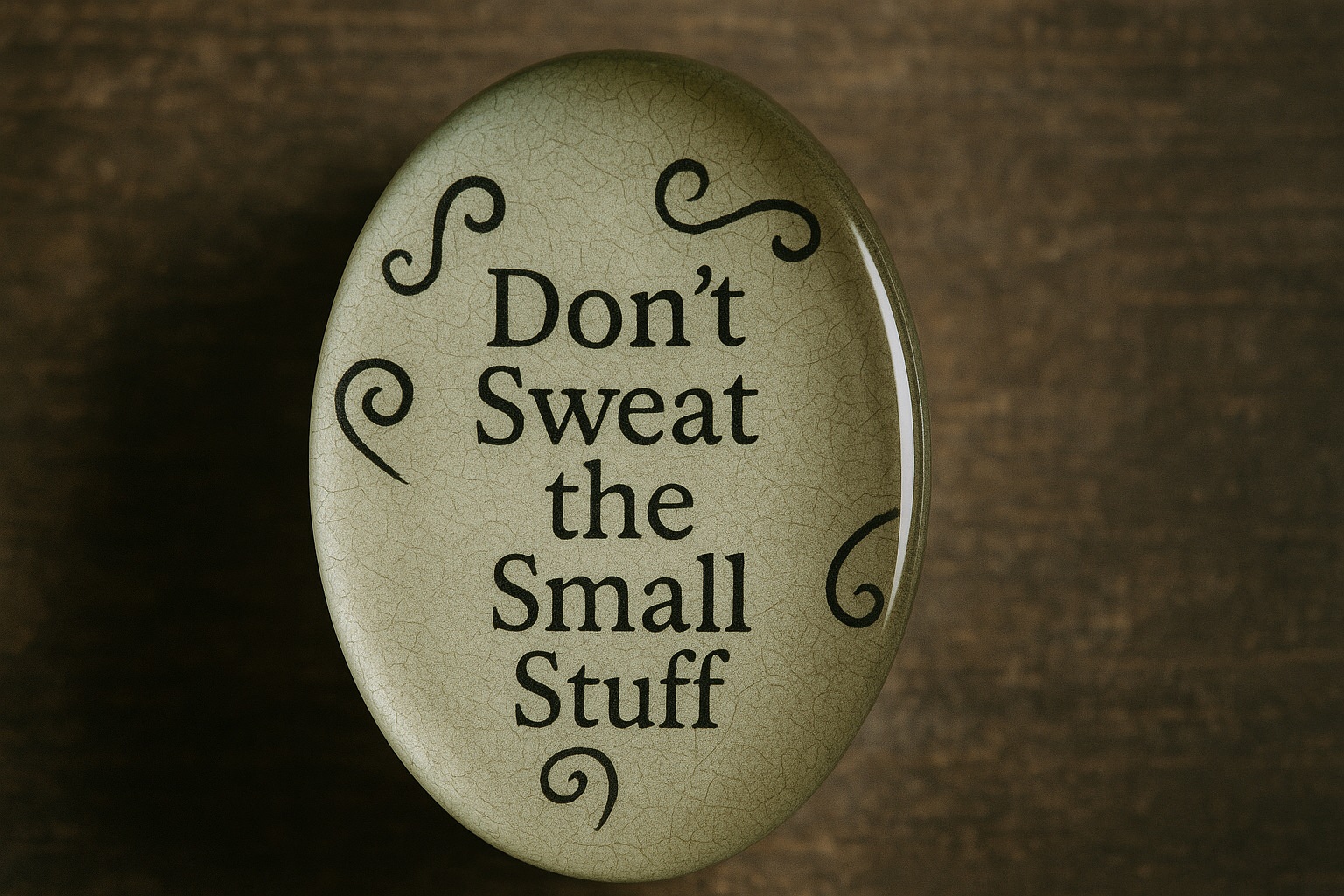
I learned the most important career lesson of my life from a paperweight I never bought.
The desk
I'd just made the jump from engineering into product management at a major medical device company. Fresh title. Corner of the office with my name on a placard. I thought I was building something.
The paperweight was already sitting on the desk when I got there. Oval glass. Slight optical warp. Inside it, four words etched in blue: "Don't Sweat the Small Stuff."
I barely noticed it at first. I was too busy being excited.
The machine
The guy who recruited me into the role was a new VP of product management. He'd been with the company a long time, but always in sales-adjacent roles. Physician relations. Account management. He talked like a closer, not a builder.
The problems started almost immediately. He would make promises to the sales team the way a sales guy does. Big timelines. Feature commitments. Things that sounded great in a conference room. Then he'd turn around and expect product development to just make it happen.
This is a medical device company. Everything is regulated. You don't just whip up a new implant because someone shook hands on it at a dinner. There are design controls, testing protocols, FDA submissions. It takes time. That's not a bug. That's how you keep people safe.
When I'd explain that to him, I became the problem. Not the timeline. Not the promise he never should have made. Me.
He started positioning me in a bad light with the VP of sales and anyone else who would listen. I was "not moving fast enough." I was "pushing back too much." The truth was, he didn't understand the difference between product management and project management. He thought they were the same thing. He expected me to be a product manager, a project manager, and a mechanical engineer, all at once, on every single project.
He was all image. All show. Zero substance. And he'd climbed the ladder the way a lot of people in corporate America do. Not by building anything. By kissing the right asses at the right time.
The board
I had a whiteboard full of projects. Timelines. Barriers. Dependencies. Every one of them had pressure coming from somewhere. Sales wanted it yesterday. Engineering needed more time. Regulatory had questions. And my boss, the guy who was supposed to be clearing the path, was the one blocking it.
That's when I started looking at the paperweight differently.
I didn't know who'd left it there. The PM role at that company was a revolving door. People burned out and moved on. Whoever sat at that desk before me had seen the same machine from the inside. They didn't leave a manual or a process doc. They left four words in a glass oval.
It was a quiet warning from a stranger. And it was the most useful thing anyone at that company ever gave me.
The mat
I've been doing martial arts my whole life. Started karate when I was nine. Discovered jiu-jitsu in college. And there's this transition that happens in jiu-jitsu that nobody tells you about.
As a white belt, you're rigid. Tight. Gripping everything. You burn through all your energy in the first two minutes because you don't have enough technique to relax. You don't have a game plan, so you just fight harder. And you lose. A lot.
But as you advance, something shifts. You stop gripping. You start flowing. You relax into positions instead of forcing them. And the strangest thing happens: you get better. Not because you're trying harder. Because you're not.
You make better decisions when you're calm. On the mat. In the office. Everywhere.
That's what the paperweight was trying to tell me.
Walking out
I eventually left that job. I had to. I'd already been set up as the scapegoat, and there was no version of staying that ended well.
When I packed up my desk, I left the paperweight right where I found it. Same corner. Same spot. I knew whoever sat there next was going to need it more than I did. They were going to walk into the same machine, face the same politics, and feel the same pressure. Maybe those four words would catch their eye on the right day.
Before I walked out, I snapped a photo of it. I've carried the message ever since.
I left that building relieved. Anxious about my future, but ready for a fresh start.
I later heard the VP got let go not long after. Turns out when you're all image and no substance, eventually people notice. It just takes longer than it should.
The lesson
Most of what stresses you out at work won't matter in five years. The political games, the ego battles, the fire drills that feel urgent but aren't. They're noise. And if you let noise run your life, you'll burn out chasing things that were never worth catching.
The people who win long-term are the ones who learn to stay calm. Not because they don't care. Because they care about the right things.
Don't sweat the small stuff.
Continue Reading
How Intuitive UX Design Keeps Visitors Engaged
Discover how intuitive UX design can dramatically reduce your website's bounce rate and transform casual visitors into engaged prospects.

Strategies to Boost Your SaaS Brand's Visibility in AI Assistants
As AI assistants become the new gatekeepers for software discovery, these 10 strategies will ensure your SaaS product appears in recommendations when users ask "What's the best tool for...?"

The ROI of Technical SEO
Technical SEO might seem complex, but it delivers some of the highest ROI of any digital marketing strategy—often with results that compound over time.